
Transforming Agricultural Waste into a Sustainable Future
2/17/20262 min temps de lecture
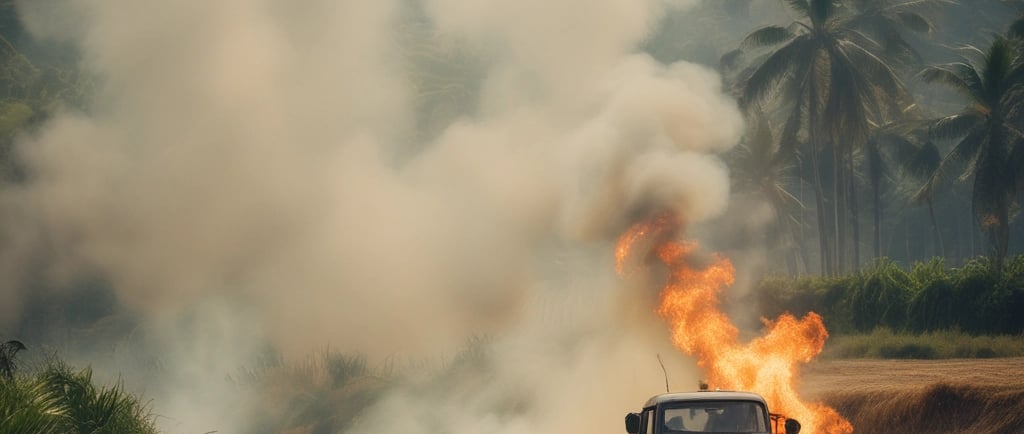

Understanding the Impact of Agricultural Waste
Agriculture underpins our food systems and rural economies, but the way we handle agricultural waste often creates hidden costs for both people and the planet. When crop residues like rice straw, corn stalks, coconut husk, and other by‑products are left to rot or are openly burned in fields, they release greenhouse gases such as carbon dioxide and methane. These gases build up in the atmosphere, drive climate change, degrade air quality, and contribute to respiratory and other health issues in nearby communities.
At Biomass Asia Inc., we see these residues not as a nuisance, but as a powerful climate solution. By capturing agricultural waste before it decomposes or is burned, and converting it into stable forms of carbon, we can “lock in” those emissions in long‑lived carbon sinks that keep carbon out of the atmosphere for hundreds, and potentially thousands, of years.
The Role of Biomass Asia Inc.
Biomass Asia Inc. was founded to change the story of agricultural waste from liability to asset. We purchase agricultural residues from local farmers and channel them into a controlled thermal process that produces high‑quality biochar and verifiable carbon removal credits. In doing so, we reduce the climate impact of traditional waste practices while creating new income streams for farming communities.
Instead of burning residues or leaving them to rot, farmers are incentivised to collect and sell them. This simple shift turns a former waste problem into a local resource: farmers gain an additional, predictable revenue source; the region benefits from cleaner air and reduced smoke; and Biomass Asia Inc. transforms the collected material into durable carbon removals that can be recognised and monetised in international carbon markets.
Empowering Communities and Reducing Emissions
The impact of this model goes well beyond revenues and balance sheets. By buying residues that would otherwise be burned, Biomass Asia Inc. directly reduces emissions of carbon dioxide, methane, and other pollutants associated with open burning. At the same time, the biochar we produce—what we call our Platinum BioChar—can be used in place of a portion of expensive, petroleum‑derived fertilisers like urea, or applied as a soil conditioner to improve structure, water retention, and long‑term fertility in depleted soils.
For farmers, this creates a virtuous cycle. Income from selling residues can be reinvested into seeds, tools, and farm improvements. Access to biochar‑based soil amendments can improve yields and resilience, especially in degraded or drought‑prone soils. Communities see reduced smoke and healthier local environments, while the region benefits from a new, climate‑positive industry built on existing agricultural value chains.
By integrating residue purchasing, biochar production, and carbon credit generation, Biomass Asia Inc. supports a circular economy where “waste” continuously flows back into productive use. Through ongoing engagement with farmers and local partners, we aim to build awareness of sustainable practices and support producers in reducing their overall greenhouse gas footprint.
A Vision for the Future
Biomass Asia Inc. stands at the leading edge of a necessary transformation in how agricultural waste is managed. By turning residues into a driver of economic opportunity and climate action, we are helping to shape a cleaner, more resilient future for farming communities and downstream markets alike.
Our commitment to purchasing agricultural residues and converting them into durable carbon removals and high‑value biochar is about more than a new business model—it is about embedding sustainability into the core of agricultural practice. Through strategic partnerships, rigorous carbon accounting, and close collaboration with farmers, we are working toward a world where every tonne of agricultural waste is seen as a chance to protect the climate, restore soils, and strengthen rural livelihoods.